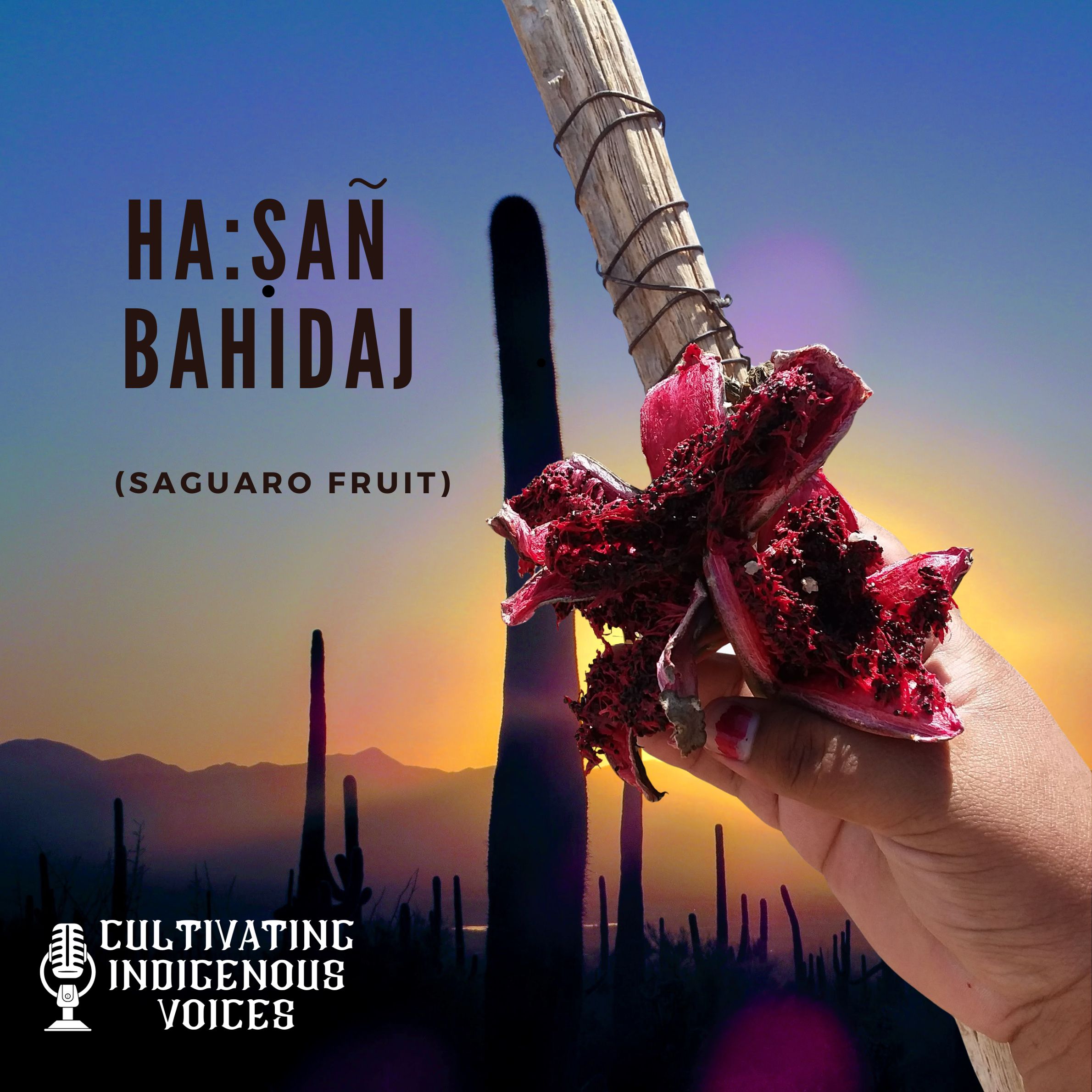
Tune in and listen to the cultural story of the Ha:ṣañ Bahidaj (saguaro fruit) harvest, a sacred summer tradition deeply rooted in O’odham history. In this special archive episode, I feature an excerpt of my late mother Amelia Chiago-Martinez (baḍ) to honor her legacy and the generations of ancestral knowledge she passed on to me. Recorded in July 2020, prior to her passing, this conversation serves as a beautiful time capsule, celebrating the rich heritage of the ha:ṣañ bahidaj (saguaro fruit) and the cultural significance of the harvest.
The sacred tradition of harvesting the ha:san bahidaj (saguaro fruit) spans countless generations within’ O’odham communities. Born in 1957 in the now-uninhabited village of Emika, Amelia later settled in Hickiwan with her family, carrying deep traditional knowledge that was simply a part of her everyday life. You will hear Amelia tell this beautiful story in her own words, followed by her own translation in the Tohono O’odham language.
Photo by T. Andrew. Pictured L to R, Amelia and her oldest grand-daughters Mia Lopez and Sarah Lopez, Amelia holding her basket, Tina and Amelia (mother and daughter), Amelia in her younger years.Also featured is LaMia (Mia) Lopez from the Tohono O’odham Nation, Mia is the eldest grand-daughter to Amelia. A few years back Mia worked as a youth intern for the Tohono O’odham Young Voices podcast creating social media content. With the podcast team, she wrote and recorded a script that talks about the enriching cultural tradition of harvesting the ha:ṣañ bahidaj (saguaro fruit). This informational recording details the ancestral knowledge passed on from generation to generation within’ the O’odham communities throughout the Sonoran desert. In this episode you will hear a voiceover recording of the script that includes background sound effects and ambient sound.
Photo by T. AndrewGrowing up on the rez, I remember being outdoors all the time. Running around in the trees, the mountains, and enjoying the seasons as they changed year round. For the summer months, not every summer but some summers me and my brothers would go out and pick the hasan bahidaj (saguaro fruit). We would find some cactus ribs laying around, tie pieces of them together to make it a longer pole, and add a cross section at the top making sure that part was sturdy enough to nudge the fruit off the saguaros. What’s funny about this is that no one ever taught us how to properly do these things, we just had an idea of how to make a kuipud (picking pole) or what to consider when harvesting the fruit, we just went by whatever knowledge we had about it and did it ourselves. I don’t think we even knew how to properly identify which fruits were ripe and which ones weren’t. But, we did it because it was something to do, and it meant that we could go out into the desert and explore. I remember one funny memory about my lu’lu’u (my moms mother) Isabel Chiago (baḍ), us kids went out one summer and picked a whole bucket of saguaro fruit, and brought it back with excitement to show our lu’lu’u Isabel baḍ how much we had harvested. She came smiling and excited about it too and immediately took the bucket into her little bith ki: (mud house/adobe house) thinking she was going to cook into the jam or sitol, and maybe she did, but I don’t necessarily remember ever eating any of it. And as I recollect about this memory I believe that maybe she made it into the nawait (wine), because by then times had changed. It wasn’t like what you heard my late mother talking about, how they would go out every summer to their family bahidaj camp and harvest as much of the hasan bahidaj (saguaro fruit) as they could. Then, upon returning home, processed the fruit into sitol (syrup) and the nawait (wine) in preparation for the rain ceremony. By this time, my grandmother Isabel was in her old age and unable to go out on her own to harvest, so for us as kids we didn’t mind going out picking the fruit and bringing it back home.
Photo created by T. AndrewTraditionally, we as O’odham believe that having a rain ceremony is critical in calling in the rains. It’s more than just drinking the wine, it involves prayer, singing traditional songs, and dancing throughout the night. Although, the cultural landscape has to some extent changed, there is still this deeply rooted continuation of our cultural and ceremonial practices being carried on.
Graphic created by T. Andrew
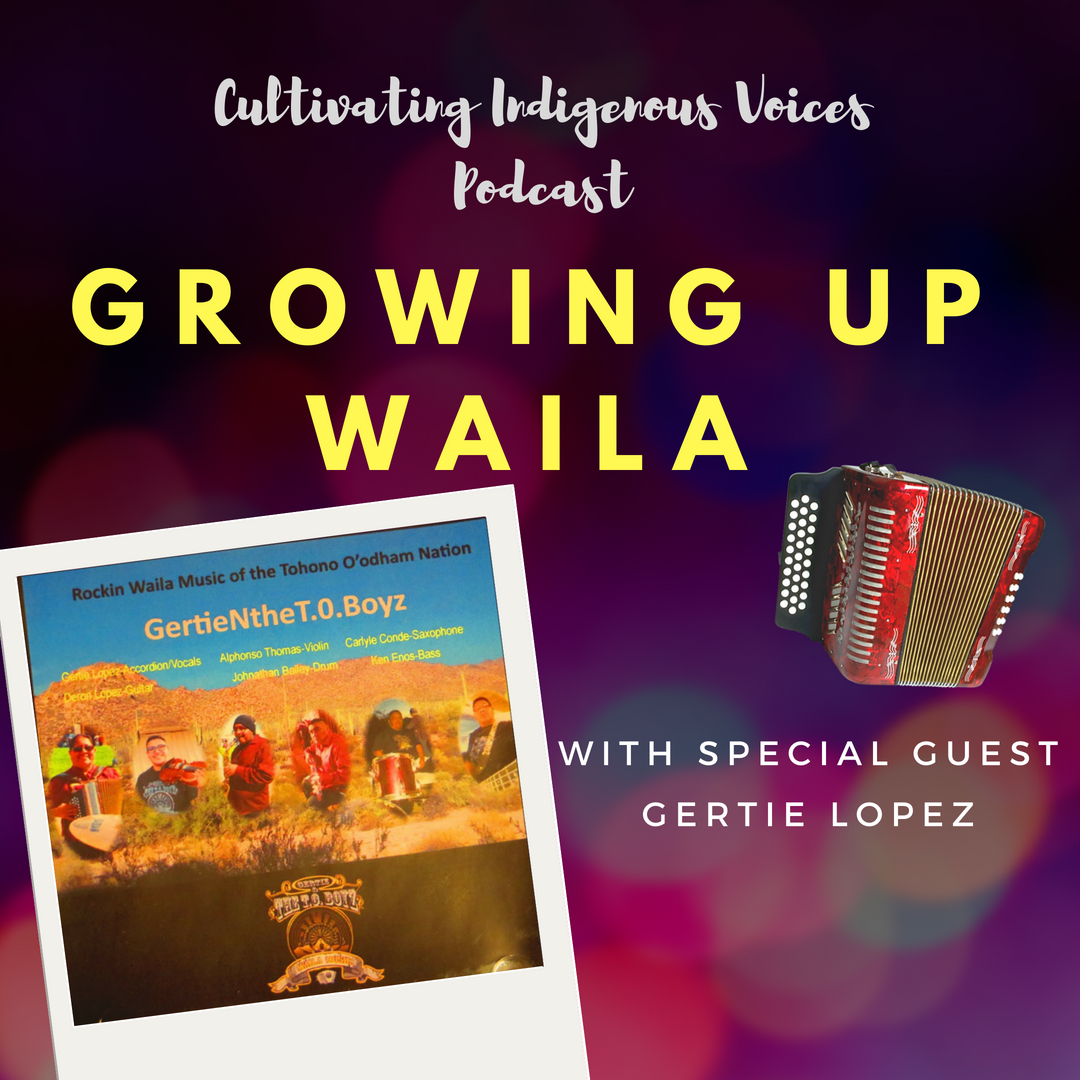
In this episode you will hear from Gertrude Lopez also known as Gertie, share her story growing up beside her dad Augustine Lopez Sr.,...
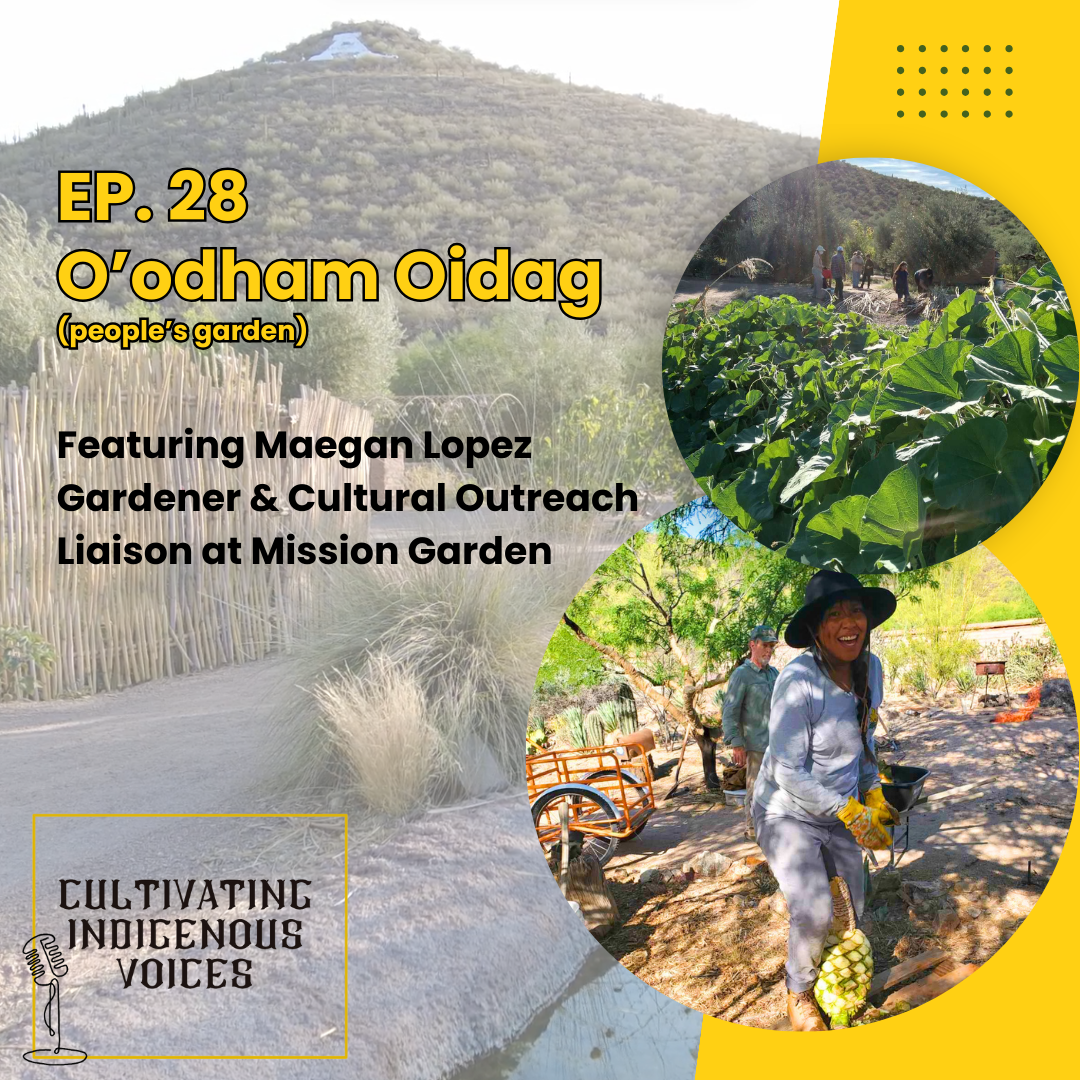
Maegan Lopez (Tohono O’odham) is from the village of Wecij Oidag (New Fields) on the Tohono O’odham Nation near the southern border. She is...

In this interview Famous Ones talk about their unique blend of sound and style that consists of a trio of brothers Chad, Carl, and...